This year's Tourism Malaysia Johor's food trail goes to the historic riverine town of Muar or Bandar Maharani. (Tourism Malaysia Johor has a popular food trail based in Johor Bahru.) Tourism Malaysia Johor invited me to participate in the launch of the Muar Food Trail from 23 to 26 June 2013.
Day 1
We gathered in Johor Bahru and proceeded to our first stop - Nasuha Herbs and Spices Paradise off Jalan Muar-Pagoh. Nasuha is a herbs plantation offering restaurants, spa, accommodations, plantation tours and outdoor activities.
The second food trail stop was Norseha Ikan Baker at Medan Sabak Awor where we had dinner. Dinner was a sumptuous spread of fresh seafood such as fish, crabs, mussels and squids cooked the traditional way by Puan Norseha and her cheerful team.
Our tummies filled, we then proceeded to the Tanjung Emas jetty to board the ferry for the interesting firefly tour along Sungai Muar.
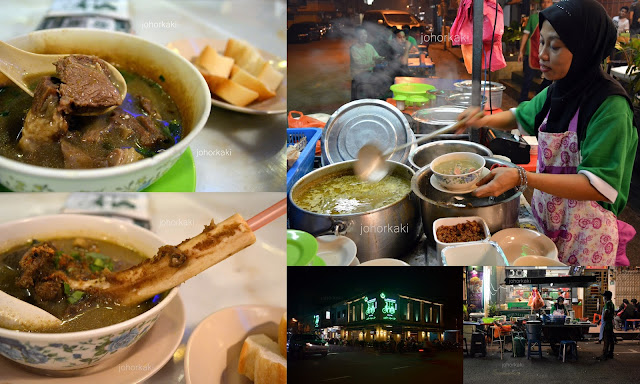
After seeing the fireflies, it was nearly midnight and we had stomach space for supper! The famous Muar Soup House was our supper. Well past midnight and Muar Soup House was still a hive of activity, many people were tucking in their soup with a teh tarik.
Day 2
The first event on the second day was the official launch ceremony of the Muar Food Trail hosted by Majlis Perbandaran Muar at the Muar Traders Hotel.
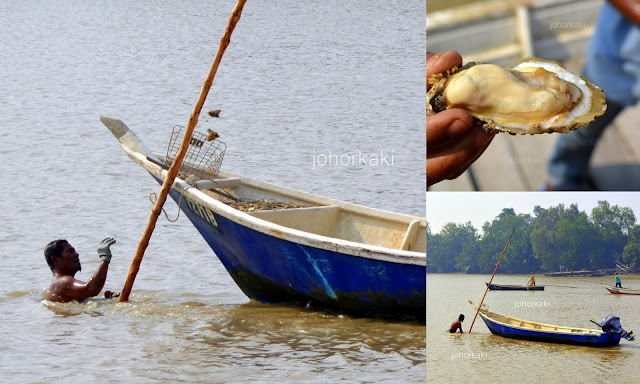
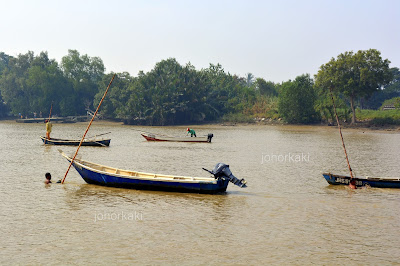
We were then back again at the Tamjung Emas jetty but this time the ferry took us out to the mouth of Sungai Muar to meet up with the sampans fishing for oysters. This was fascinating! The fishermen dived for oysters without diving gear. They fished for wild oysters the same way as was done long, long ago.
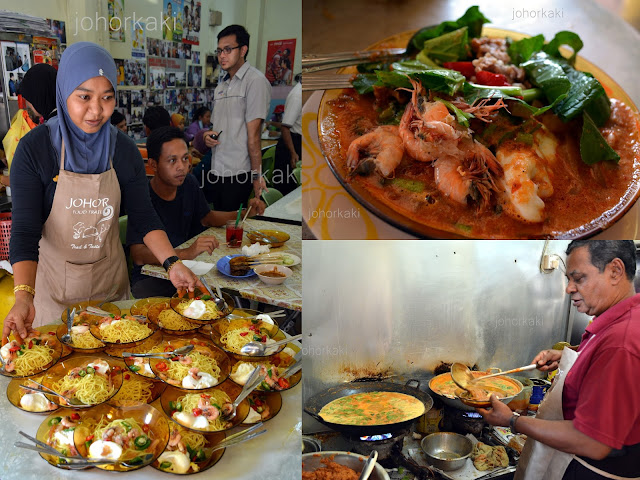
After watching oyster fishing, we went back to downtown Muar for Mee Bandung, an iconic local dish. One of the best examples is at Kedai Mee Bandung Abu Bakar.
Dinner was BBQ fare at Mann Chalet at Kampung Seri Pantai.
Day 3
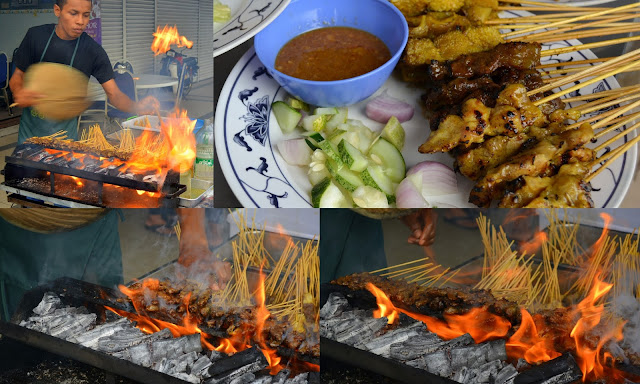
We started the day with a sumptuous and scrumptious breakfast at the popular R&H Cafe Sate Maharani.
R&H Cafe is famous for their sate (satay) which, uniquely in Muar, is eaten during breakfast.
Besides the delicious sate we had mee rebus Jawa, lontong, tauhu lentok, nasi ambeng, and nasi lemak just to name a few.
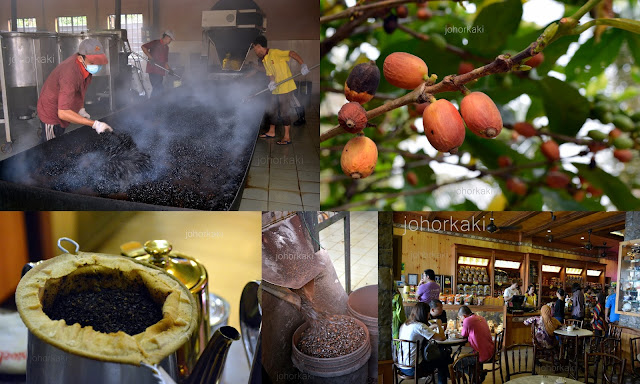
We then took a drive to the Kopi 434 plantation and factory. We were shown the coffee production process from harvesting the coffee berries, to husking, roasting and packing. We sampled Kopi 434's premium quality Elephant Brand Liberica coffee and also dropped by at their outlet at Jalan Maharani.
Next stop was the famous Asam Pedas Mak Pon at Parit Jawa. Very fresh fish cooked in mildly spicy asam pedas.
After lunch, we proceeded to Homestay Parit Bugis and visited various traditional cottage industries in the village such as Tempe, Cakar Ayam, Kuih Bahulu and Gula Melaka production.
We spent the night at Homestay Parit Bugis. We were treated to a traditional nasi ambeng dinner where all the guests enjoyed mixing and sharing the delicious food together. This is a great traditional bonding experience not to be missed. Reminds me of the Chinese lou hei (toss raw fish salad) during Chinese New Year.
After-dinner entertainment were the amazing Kuda Kepang and Barongan performances.
The dancers swaying rhythmically to the hypnotic beat.
I was thrilled by the Barongan dance but some in the audience found it rather "scary".
Day 4
The next morning we bid farewell to our gracious hosts while having a breakfast of traditional kuih (sweet cakes) and nasi lemak.
It was a very interesting 4 days getting to know Muar and especially it's people, culture and traditional foods.
Tourism Malaysia Johor's Muar Food Trail 2013 is a very well thought out food tour itinerary that tourists will find very helpful.
I am a coffee lover. No, that's not entirely accurate. I am a coffee addict needing over 5 mugs of kopi kau (thick coffee) every single day.
So, since I started Johor Kaki blog in 2011, I have asking around and looking for opportunities to visit a coffee plantation in Johor, but with no success. So, you can imagine how thrilled I was to have the chance to visit Sai Kee Coffee 434 or Elephant brand coffee plantation in Muar, thanks to Tourism Malaysia Johor's Muar food trail.
Here are the stages of production of Elephant brand coffee at Sai Kee Coffee 434.
The ripe premium grade Liberica berries ready for harvesting. It takes 3 to 4 years for a coffee seedling to mature into a fruit bearing tree. The ripe and best berries are hand picked - cherry picking, literary.
Sai Kee Coffee 434 uses the traditional "dry" method to separate the coffee seed and the pulp. The Liberica berries are simply spread on the clean ground in a "green house", turned regularly with shovels and allowed to dry. The "green house" protects the berries from dust, sand, and rain. It felt very hot and humid inside the "green house".
When the berries become wrinkly and dry (10% moisture left), the pulp and seed are separated (a process known as hulling). The pulp is used as an organic fertiliser while the seed is the much sought after coffee bean.
To make traditional kopitiam coffee, the beans are roasted with margarine, sugar, sesame seeds and other ingredients. This style of roasting coffee beans is unique in Malaysia and Singapore. Here, workers are air cooling the freshly roasted over 200ºC hot beans by spreading them out using shovels.
The roasted beans are oily and tacky, caked and stuck to the shovel - a bit like that stubborn used chewing gum stuck to the bottom of our shoes.
Worker transferring the caked, roasted beans in buckets to the separator.
The caked, roasted beans spun and separated.
These are Elephant brand premium Liberica beans ready for grinding.
The final step in the production process - packing the grounded beans into sachets and bags.
Making coffee at Sai Kee Coffee 434 the old way by pouring boiling water through roughly grounded beans in a white muslin sock. Sai Kee was founded in 1953 by, you guessed it, Ah Sai. The number 434 was the telephone area code for Muar in the 1960s, and today it is synonymous with Sai Kee coffee.
Our sample of freshly brewed Elephant brand coffee in a styrofoam cup. The coffee was full bodied, robustly flavoured, bitter and sweet. Love it.
The rather gay and lavish interior of Sai Kee Coffee 434 Cafe at Jalan Maharani in downtown Muar.
(Note: Johor Kaki has no affiliation with Sai Kee Coffee 434. There are no fees for this or any post in Johor Kaki. LOL Sai Kee Coffee may not even be aware of this post :) )
Restaurant name: Sai Kee Coffee 434 Address: 121, Jalan Maharani (across the road from the central bus station and wet market) Map: http://goo.gl/maps/TlU3f GPS: 2.048787,102.567999 Hours: 8:00am to 5:30pm daily Certified Halal Date visited: 17 Mar 2013, 25 Jun 2013
The first time I heard about Muar oysters was from the lady boss of Ah Hua kway teow thng at Jalan Segget in old downtown Johor Bahru.
Ah Hua at Jalan Segget is famous for their RM16 fully loaded kway teow thng. The lady boss proudly told me that "I use only Muar oysters. More expensive but the best."
A quick search of the Singapore National Library archives revealed that Muar oysters were already a well known, much sought after delicacy even during the early 1900s.
You can imagine how excited I was to have a chance to see oyster divers in action in the Muar river during the Muar Food Trail by Tourism Malaysia Johor.
We boarded a ferry at the Tanjung Emas jetty to link up with the divers' sampans at the Muar river mouth.
The divers start work each day when the tide is low. Coming out in groups in motorised sampans.
The diver heaved himself high above the water to take a long, deep breath. The divers dive just by holding their breath under water - no breathing apparatus is used.
The divers then disappeared under the water. The only things still visible were the sampans and the long wooden poles. As the current was swift in the Muar river, the boats continued to drift at a fast clip towards the sea while the divers were looking for oysters. The divers used the long poles to guide them down and up the oyster bed.
A few minutes later, the diver surfaced and threw the oysters into the sampan.
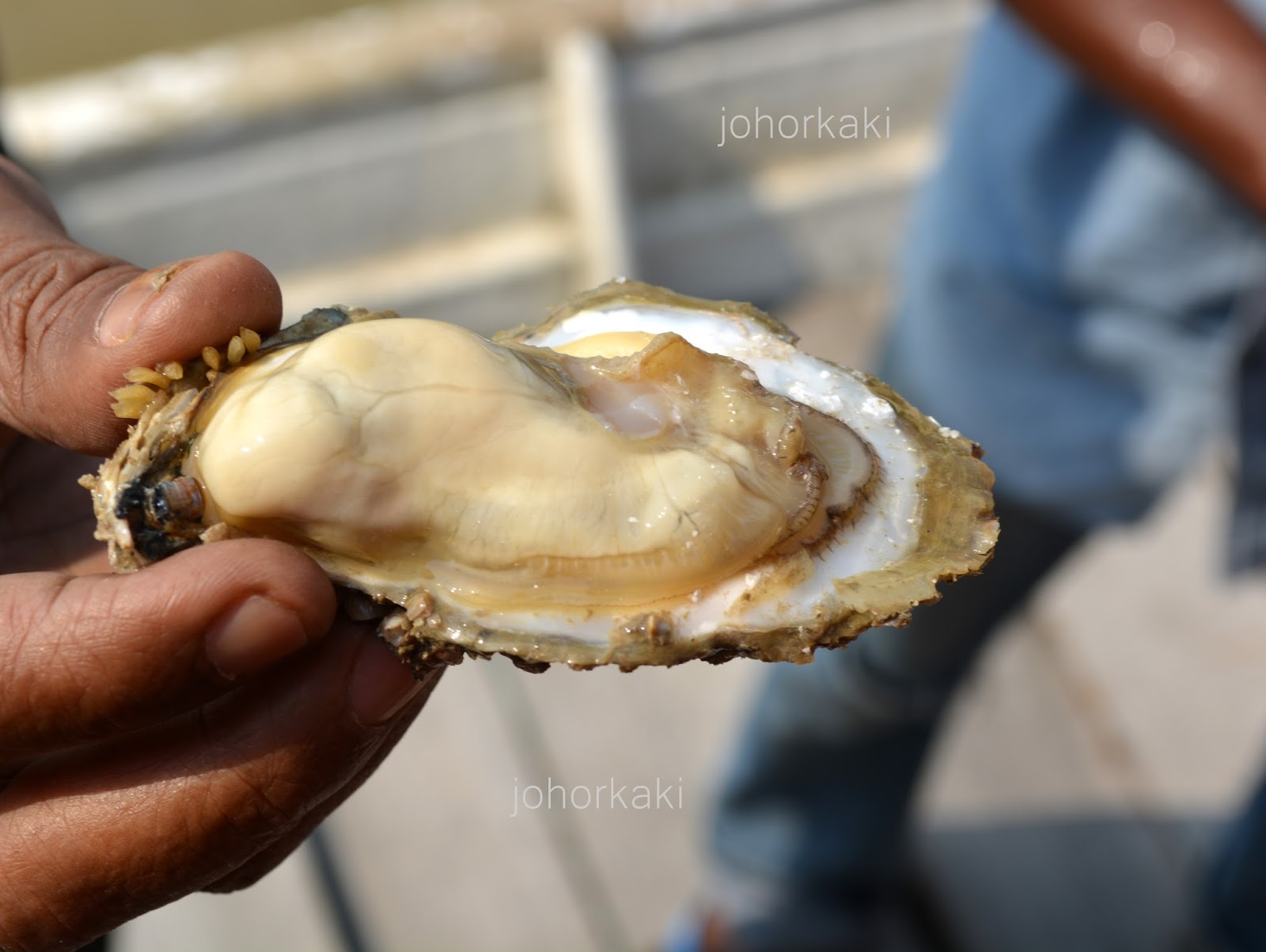
A middle man with a freshly caught oyster. At the time of writing, the divers sold the oysters to the middle man at RM20 per kilo. This seems like quite a fair price for the divers' hard work, considering how heavy oyster shells are.
The Muar oyster that I ate straight from the Muar river bed. The slippery oyster was soft, fat, juicy, savoury and creamy.
Mee Bandung Muar (MBM) is one of the uniquely Johor dishes that make up the Johor brand of foods. Enche Abu Bakar Hanipah's Mee Bandung Muar Special is one of the best versions of this Johor speciality.
I was first introduced to Abu Bakar Hanipah's Mee Bandung Muar Special during Tourism Malaysia Johor's 2013 food trail featuring the riverine city of Muar.
As we approached Enche Abu Bakar Hanipah's stall, the aromas, cooking fumes and buzz at the old kopitiam in busy downtown Muar instantly excited my foodie instincts.
Inside the typically grimey old town Wah San kopitiam, every inch of the the walls were plastered with photos of the who's who of Malaysia and Singapore visiting Abu Bakar Hanipah's MBM stall.
My salivary glands immediately kicked into overdrive. My taste buds were primed to nearly unrealistic levels.
I am pleased to say that Abu Bakar Hanipah's MBM Special more than met my expectations.
The secret of Abu Bakar Hanipah's MBM Special is in this sambal made mainly with dried shrimps, chili and spices.
I love Abu Bakar Hanipah's MBM a lot because of the savoury and mildly spicy gravy. I like it that the gravy is chock full of ingredients and feels substantial and full bodied. This gravy is made with diced cubes of beef, shrimps, cuttlefish, and the signature grainy sambal made mainly with ground shrimps, chili and spices. Some might find it on the slightly overpowering side but it tasted just perfect to me :P
Enche Abu Bakar Hanipah is a very warm and friendly man who is infectiously proud and passionate about his MBM Special. He also has a natural marketing flare. When asked if I could take photos of him in action, he instantly straightened up and snapped into this well rehearsed pose. After the obligatory picture, I had to gently persuade him to let me have some candid shots of him at work :P
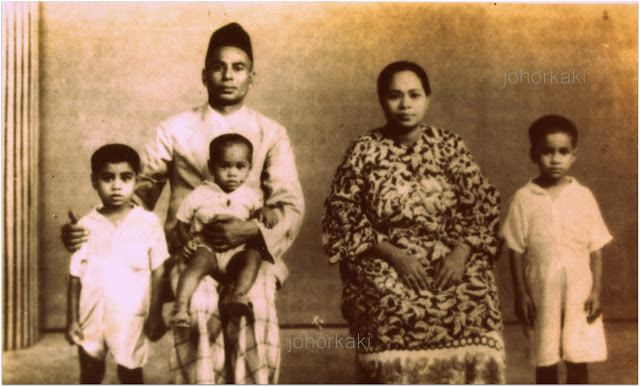
Enche Abu Bakar Hanipah is the baby on his father's lap. Abu Bakar Hanipah has been helping out at his father's MBM stall since he was a primary school boy.
Abu Bakar Hanipah's grandfather came from Madras, India and invented this special version of MBM. The stall opened in Muar in 1930. Today, Abu Baker Hanipah has two stalls in Muar, one in Pagoh and he is going to further open a branch each in Kuala Lumpur and Johor Bahru.
Helping Abu Bakar Hanipah at the stall today are his wife, daughter and his youngest son.
Mee Bandung Muar fans will be glad to know that Abu Bakar Hanipah's MBM Special is in good hands with Sabarina poised to continue the tradition when Abu Bakar Hanipah retires.
When you are in Muar, pay Enche Abu Bakar Hanipah a visit and try his Mee Bandung Muar Special. It's quite a treat at RM4.00 a plate.
Restaurant name: Mi Bandung Muar (Special) - stall in Wah San kopitiam Address: 69-A, Jalan Abdullah, Muar, Johor Map: http://goo.gl/maps/4zImu GPS: 2.050674,102.571642 Hours: 6:30am to 5:00pm Halal
Date visited: 25 Jun 2013
Mee Bandung Muar (MBM) is one of the uniquely Johor dishes that make up the Johor brand of foods. Enche Abu Bakar Hanipah's Mee Bandung Muar Special is one of the best versions of this Johor speciality.
I was first introduced to Abu Bakar Hanipah's Mee Bandung Muar Special during Tourism Malaysia Johor's 2013 food trail featuring the riverine city of Muar.
As we approached Enche Abu Bakar Hanipah's stall, the aromas, cooking fumes and buzz at the old kopitiam in busy downtown Muar instantly excited my foodie instincts.
Inside the typically grimey old town Wah San kopitiam, every inch of the the walls were plastered with photos of the who's who of Malaysia and Singapore visiting Abu Bakar Hanipah's MBM stall.
My salivary glands immediately kicked into overdrive. My taste buds were primed to nearly unrealistic levels.
I am pleased to say that Abu Bakar Hanipah's MBM Special more than met my expectations.
The secret of Abu Bakar Hanipah's MBM Special is in this sambal made mainly with dried shrimps, chili and spices.
I love Abu Bakar Hanipah's MBM a lot because of the savoury and mildly spicy gravy. I like it that the gravy is chock full of ingredients and feels substantial and full bodied. This gravy is made with diced cubes of beef, shrimps, cuttlefish, and the signature grainy sambal made mainly with ground shrimps, chili and spices. Some might find it on the slightly overpowering side but it tasted just perfect to me :P
Enche Abu Bakar Hanipah is a very warm and friendly man who is infectiously proud and passionate about his MBM Special. He also has a natural marketing flare. When asked if I could take photos of him in action, he instantly straightened up and snapped into this well rehearsed pose. After the obligatory picture, I had to gently persuade him to let me have some candid shots of him at work :P
Enche Abu Bakar Hanipah is the baby on his father's lap. Abu Bakar Hanipah has been helping out at his father's MBM stall since he was a primary school boy.
Abu Bakar Hanipah's grandfather came from Madras, India and invented this special version of MBM. The stall opened in Muar in 1930. Today, Abu Baker Hanipah has two stalls in Muar, one in Pagoh and he is going to further open a branch each in Kuala Lumpur and Johor Bahru.
Helping Abu Bakar Hanipah at the stall today are his wife, daughter and his youngest son.
Mee Bandung Muar fans will be glad to know that Abu Bakar Hanipah's MBM Special is in good hands with Sabarina poised to continue the tradition when Abu Bakar Hanipah retires.
When you are in Muar, pay Enche Abu Bakar Hanipah a visit and try his Mee Bandung Muar Special. It's quite a treat at RM4.00 a plate.
Restaurant name: Mi Bandung Muar (Special) - stall in Wah San kopitiam Address: 69-A, Jalan Abdullah, Muar, Johor Map: http://goo.gl/maps/4zImu GPS: 2.050674,102.571642 Hours: 6:30am to 5:00pm Halal